
My Odyssey with the Stone Monkey: A Poetic Journey Through Black Myth: Wukong
Black Myth: Wukong captivates with its mythic storytelling and immersive world, redefining digital odysseys in gaming history.
I hold the staff, and the world bends. The air, thick with incense and ancient malice, parts before my charge. I am the Destined One, a reincarnated spark of rebellion against Heaven itself, and my journey across this digitally rendered mythscape feels less like playing a game and more like stepping into a living, breathing tapestry woven from the threads of Journey to the West. Two years have passed since its grand unveiling in 2024, and in 2026, Black Myth: Wukong remains not just a memory but a landmark—a testament to what happens when ambition is poured into every pixel, every animation, every whispered riddle from a headless monk. This is not merely a game I played; it is an odyssey I inhabited.
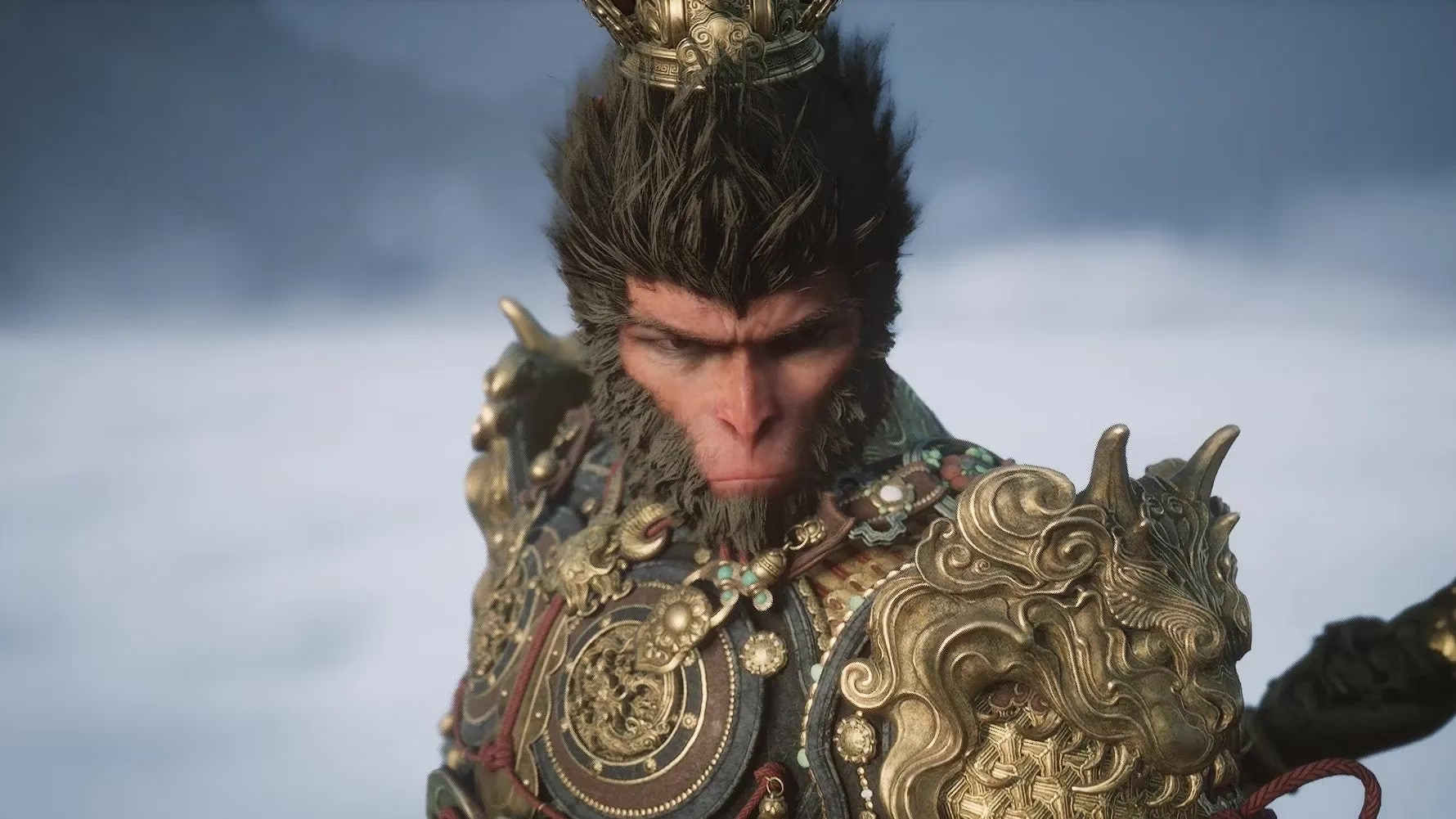
The narrative, for a soul like mine unversed in the classical novel, unfolded like a dream remembered in fragments. A rebellion, a fall, a reawakening. My purpose? To thwack the shite out of Yaoguai, as the review so bluntly put it. Yet, to reduce it to that is to call a symphony a series of noises. The story is delivered in the Souls tradition—cryptic, environmental, spoken in riddles by creatures whose very forms are puzzles. A rat the size of a skyscraper isn't just an enemy; it's a walking question about scale and corruption. I didn't always grasp the 'why,' but I was utterly enslaved by the 'how.' The spectacle was its own language. The boiling spittle of a blazing deity wasn't a threat; it was a stanza in an epic poem written in fire and fury. My ignorance became a kind of bliss, allowing me to experience the tale not as a historian, but as a pilgrim—wide-eyed and wondrous.
Completing a chapter would often gift me with interactable art, sumptuous scrolls that laid out the story's progress. They were beautiful, intricate knots tying me back to the source material I vowed to finally read. And then there were the meditation points. Ah, the meditation points! These were not mere checkpoints but sanctuaries. Here, I could pause the relentless march of combat and simply be. The camera would pan, a silent observer, over frescoes etched into living rock or the impossible curvature of a temple roof dusted with snow. The world of Black Myth is a character in itself, a patient and ornate guardian of secrets.
This world, though linear in its chapter-based structure, never felt like a funnel. It felt... authentic. The paths through swaying groves and across golden sands didn't feel designed by a mouse, but discovered by foot. They were compact realms stitched together by Shrines (this game's generous Bonfires), each zone a self-contained diorama of breathtaking beauty. Yes, invisible walls sometimes halted an ambitious jump, a reminder of the digital frame around this painting. But the frame is gilded in pure artistry. I have never been so consistently awestruck by a virtual space. The snow trails left by my tail and staff, the way sakura blossoms erupted from a newly activated Shrine—these were not details; they were verses in the game's visual poetry. Glistening turtle-shaped incense burners sat as still as fossilized prayers, waiting for my gaze before I returned to the dance of slaughter.
And what a dance it is! Combat here is a kinetic ballet centered on the extension of my will: the staff. There is no shield, no hiding. Only the dodge, the twirl, the strike. It is a system of elegant pressure and release. Landing blows, perfectly timed evasions—they build Focus, a resource that hums beneath my simian skin. Unleashing it feels like cracking the sky with a single, definitive thunderclap. The generosity of the systems soon reveals itself. I am not locked into one style. I have three stances at my beck and call:
| Stance | Primary Use | Poetic Flair |
|---|---|---|
| Smash | Dueling, raw power | The weight of a mountain in every swing. |
| Pillar | Mobility, evasion | Becoming a stilt-walker over a sea of claws, sipping healing from my gourd atop my own weapon. |
| Thrust | Precision, reach | A heron's beak, jabbing from a safe distance. |
Switching between them in the heat of battle is where the combat sings its own complex song. But the true magic, the spice that transforms brawls into operas, lies in the Spells. Four slots house abilities that feel less like game mechanics and more like stolen divine secrets. Early on, I learned Immobilize, freezing an enemy in a golden glaze mid-leap—a moment of perfect, stolen time. Later, I could turn my skin to stone to parry a devastating blow, or summon shadow clones to swarm a foe. The freedom is intoxicating. It’s a magical toolbox that makes every encounter a playground of possibility, a stark and welcome contrast to the often-constrained magic of its genre inspirations.
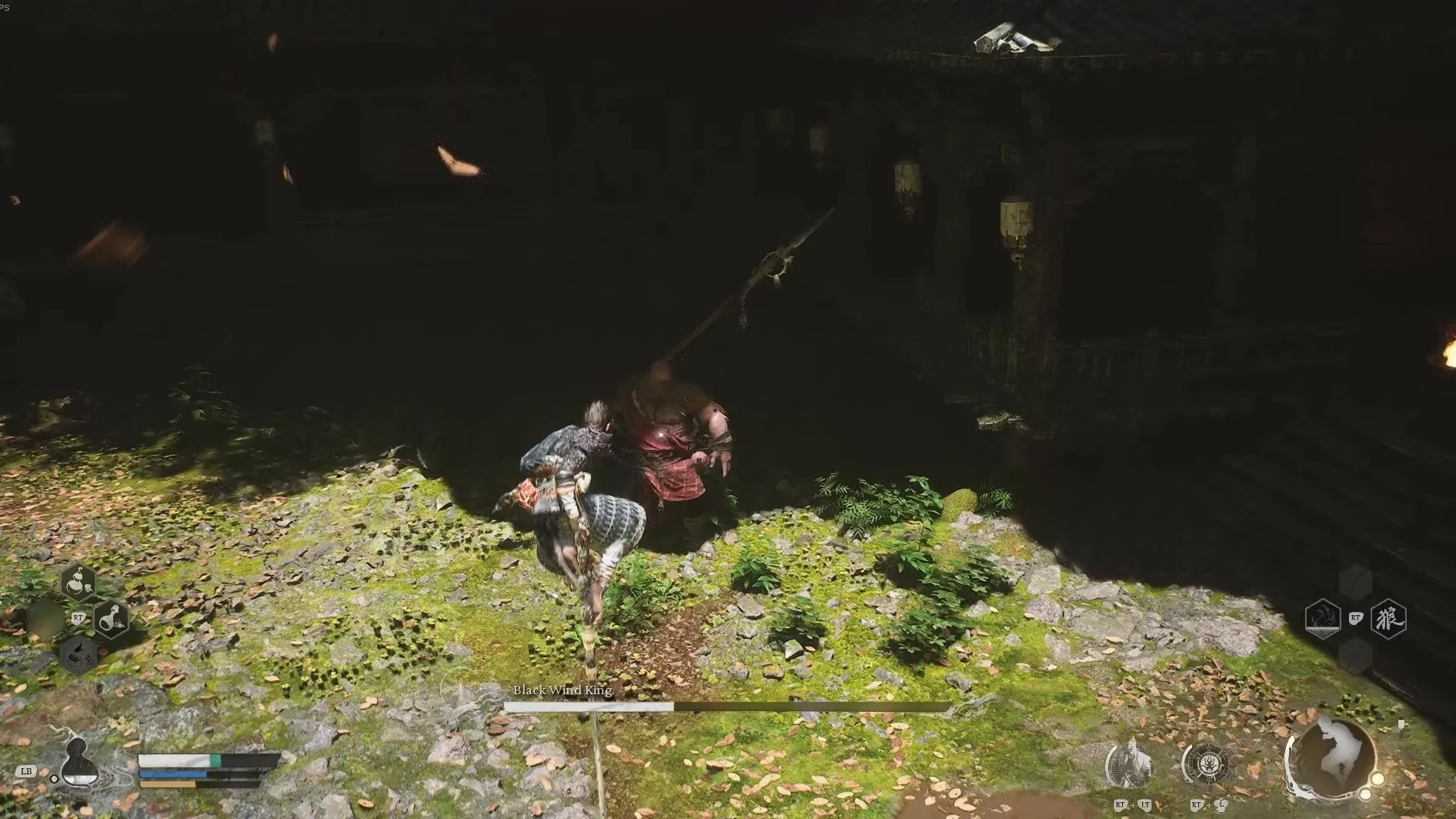
The progression feeds this sense of generous empowerment. Defeated enemies drop Will, a permanent currency that never vanishes upon death—a merciful departure from Soulsy norms. With Will and Sparks earned from leveling up, I fed a sprawling skill tree. I confess, the tree felt as cluttered as a scribe's desk after a week of revelations, brimming with foundational upgrades and flashy techniques. Yet, the ability to respec at will encouraged experimentation, letting me tailor my monkey god to my mood.
Equipment is simpler, a nod to the adventure side of its hybrid soul. Crafting new staves and armor sets from fallen foes' parts offered tangible growth without burying me in stat analysis. This deliberate simplicity meant less time in menus and more time in the presence of the game's true stars: the bosses.
Oh, the bosses. Each is a masterpiece of design and drama. A gyrating dragon spiraling through a storm-lashed sky isn't just a health bar to deplete; it's a force of nature to be survived. A corrupted Buddha slamming its palm down, causing the earth to splinter and pulse with malignant energy, is a theological crisis made manifest. Their attack patterns are puzzles written in motion, demanding respect and adaptation. One even mocked me, mimicking my own spell back at me—a moment of shocking, brilliant personality that made the world feel alive and watching.
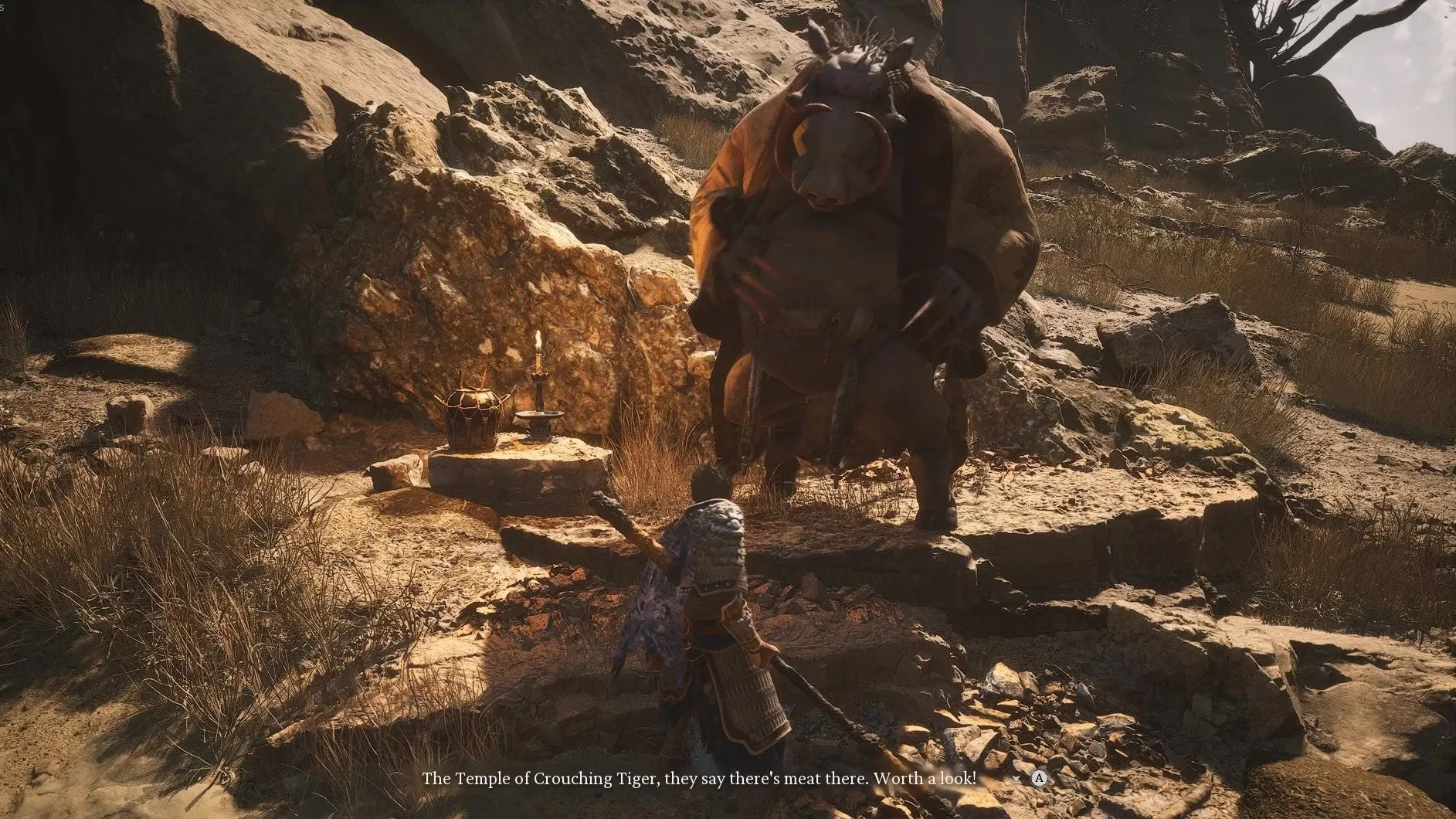
The world is dotted with surprises for the curious. NPCs with cryptic requests, secret pathways leading to hidden realms that feel like stumbling into the margins of a forgotten manuscript—these are the rewards for those who listen and explore. It creates a rhythm of tense combat and serene exploration that is, quite simply, spot on.
In the years since its release, the conversation around the game has, rightly, expanded to include the serious allegations regarding the culture at its developer, Game Science. The sublime art within the game exists alongside troubling reports from outside it. This dissonance is a shadow that cannot and should not be ignored. Engaging with the art requires acknowledging the full context of its creation.
Yet, as a pure experience of play, Black Myth: Wukong stands as a monumental achievement. It is a generous, gorgeous, and deeply satisfying hybrid. It takes the stern challenge of a Soulslike and marries it to the cinematic wonder of a grand adventure, then empowers you with a toolkit of glorious, stylish violence. It is a game that didn't just want to be played; it wanted to be witnessed, to be felt in the sinew and the soul. It announced Game Science not as newcomers, but as contenders. And two years later, the echo of that announcement—the crack of the staff, the roar of the gods, the silent fall of cherry blossoms in a digital grove—still resonates deeply within me. The journey is over, but the myth endures.