
My Journey with Black Myth: Wukong: A Dream Realized
Black Myth: Wukong's stunning UE5 visuals and Soulslike combat deliver a philosophical Journey to the West narrative with transformative boss battles.
I still remember the day I first laid eyes on Black Myth: Wukong. It was 2020, and a gameplay trailer popped up in my feed—thirteen minutes of pure, unadulterated action. The visuals were unlike anything I’d seen from an indie studio. A monkey warrior with a staff, fluidly transforming into a golden cicada, then facing a dragon made of lightning. I was hooked instantly. At that time, it felt like a distant dream, something too good to be true. But this little Chinese studio, Game Science, had planted a seed of anticipation in me, and I watered it with every scrap of news for years.
When they announced the move to Unreal Engine 5 in 2021, I almost gasped. The original footage had already been jaw-dropping, but the promise of Nanite geometry and Lumen lighting made me upgrade my PC prematurely. I remember scrolling through forums, seeing the Nvidia partnership reveal—DLSS support confirmed—and feeling a mix of relief and impatience. This wasn’t just a tech demo anymore; it was shaping up to be a full-fledged epic, and my RTX 3070 was going to be well fed.
Fast forward to early 2025. After years of trailers, developer updates, and an investor-hunting period that felt like an eternity, Black Myth: Wukong finally landed. I pre-ordered the moment I could. The release day was a holiday for me. I brewed a pot of strong tea, dimmed the lights, and dove in.
The first few hours were a sensory overload. The opening level plunged me into a bamboo forest dense with verticality. Sunlight pierced through the foliage in rays so realistic I almost squinted. I spent ten minutes just panning the camera around a stone temple, marveling at the moss on the walls and the way the wind stirred the leaves. This was Unreal Engine 5 in full force, and my GPU hummed with the quiet satisfaction of DLSS’s magic.
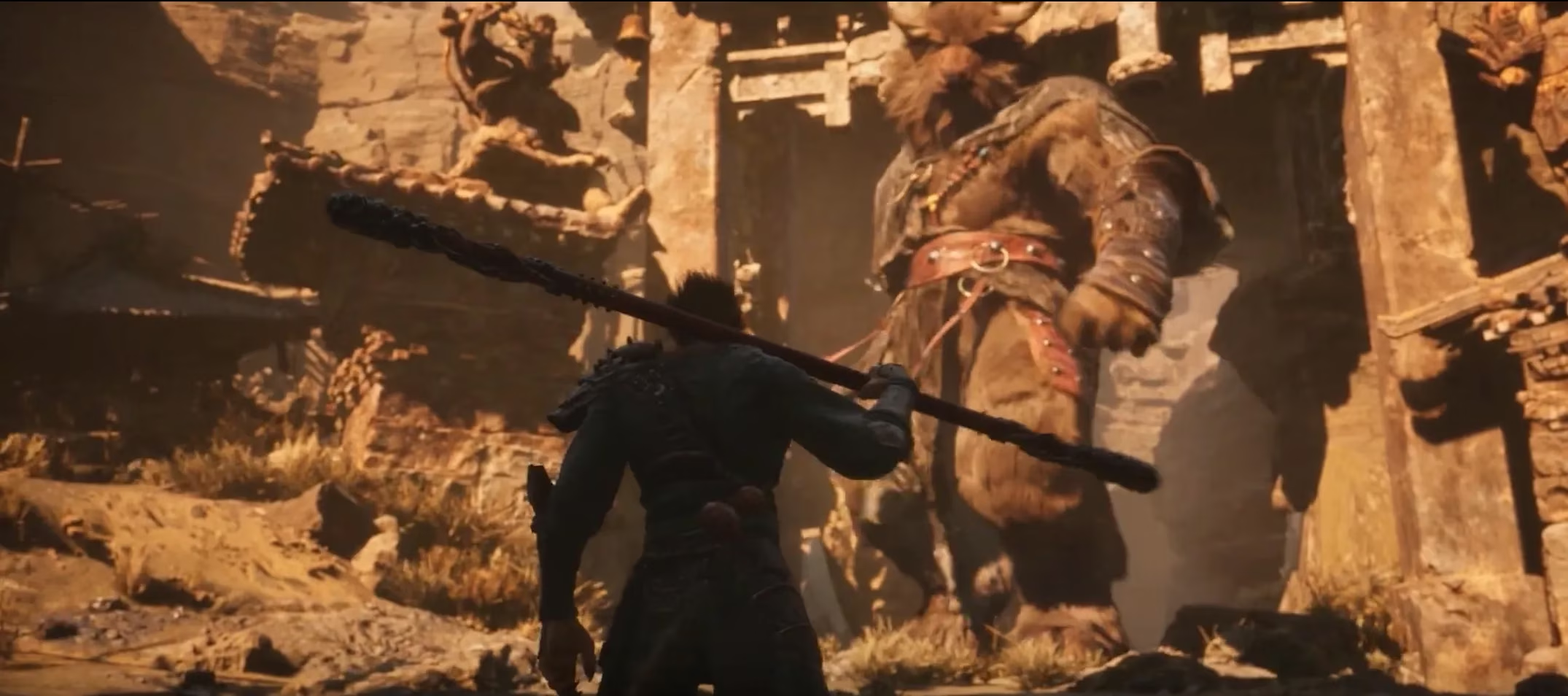
Combat turned out to be the true core of the experience. The developers described it as a mix of Soulslike patience and the frantic agility of Devil May Cry, and I felt that fusion in every encounter. I had a stamina bar to manage, yes, but the rhythm was more vertical. I could chain light attacks, heavy slams, and dodge-cancel into a cloud-step illusion that left my foe swinging at air. The first major boss—a grotesque, many-armed demon general—handed me my own defeat at least fifteen times. I learned to read his tells: the subtle shoulder twitch before a sweeping slash, the quick inhale preceding a lightning bolt from his mouth. When I finally toppled him, my hands were shaking. I stood up and cheered, forgetting completely that no one else was in the room.
What truly elevated the experience, though, was the narrative. The game is rooted in Journey to the West, but it weaves its own darker, more philosophical tale. I played as Sun Wukong, the proclaimed Monkey King, but not at the peak of his power. The story explores themes of identity and hubris, and I often had to choose dialogue options that affected my karma—yes, the game has a hidden morality system that influences which transformations (from a giant ape to a tiny insect) become available. I recall one side quest where I spared a tiger demon who had been feeding on corrupt monks. In return, I gained a spirit summon that later saved me from a trio of lighting-fast fox spirits. Those branching moments made the world feel alive and reactive.
Exploration was never a straightforward affair. While earlier trailers had shown sprawling landscapes, the final game exceeded my expectations. Secret areas lurked behind waterfalls that rippled with physically simulated fluid. One memorable hidden cave required me to shrink into a gold cicada and fly through a gap I’d previously ignored. Inside, I found a boss so massive that the fight took place on its body, climbing its fur and striking the glowing weak points. I died twenty times there, but each death taught me a new approach.
The audio design deserves its own paragraph. The clang of my staff on stone, the guttural roars of demon apes, the faint chime of a distant quest—each sound pulled me deeper. The soundtrack blended traditional Chinese instruments with modern orchestral sweeps, swelling during boss fights until my subwoofer rattled the floor. I played with headphones often, just to catch the crisp details of footsteps on wet gravel or the whisper of a spirit guiding me toward a hidden shrine.
In the months since release, I’ve completed the game twice. My first run took me about 50 hours, but as is tradition with my favorite action titles, I immediately started New Game Plus with a different build. Where I’d originally focused on heavy transformations (think a thunder-wreathed gorilla form), I now dance through fights as a sleek, illusion-spawning trickster. The skill ceiling is so high that I’m still discovering combos. The community has been a marvel, too—sharing lore theories, hidden paths, and even AI-generated art of the more breathtaking vistas.
Looking back, I realize that Black Myth: Wukong didn’t just meet my expectations; it redefined what I thought an indie studio could achieve. Game Science took a classic tale, drenched it in cutting-edge tech, and delivered a combat system that stands shoulder to shoulder with the greats. It’s 2026 now, and I still load it up on rainy Sundays just to wander the bamboo forests or challenge a random boss. That initial thirteen-minute spark has become a bonfire that warms this gamer’s heart, and I can’t wait to see what myths they tackle next.