
Mastering Black Myth Wukong in 2026: An Expert Player’s Guide
Two years on, Black Myth Wukong's boss guide, weapon upgrades, and spell list remain your key to conquering its celestial fury.
Two years after its release, Black Myth Wukong still holds me in its iron grip. 2024’s surprise game of the year contender has aged like a fine wine – or perhaps like a barrel of ancient celestial vinegar, pungent and impossible to ignore. I still remember my first encounter with the Tiger Vanguard; it felt like trying to thread a needle in a hurricane, every missed parry a tiny death. Since then, I’ve plunged deeper into the celestial realms than most, and I’ve emerged with a satchel full of hard-won wisdom. Whether you’re a fresh pilgrim or a returning Destined One looking to crush new game plus with style, this guide is your personal scroll of enlightenment.
It’s 2026 now, and the community has dissected every inch of Game Science’s masterpiece. The game’s journey mirrors Sun Wukong’s own – full of shape-shifting challenges that demand not just reflexes, but the patience of a mountain hermit. Let’s start with the heart of the challenge: the bosses.
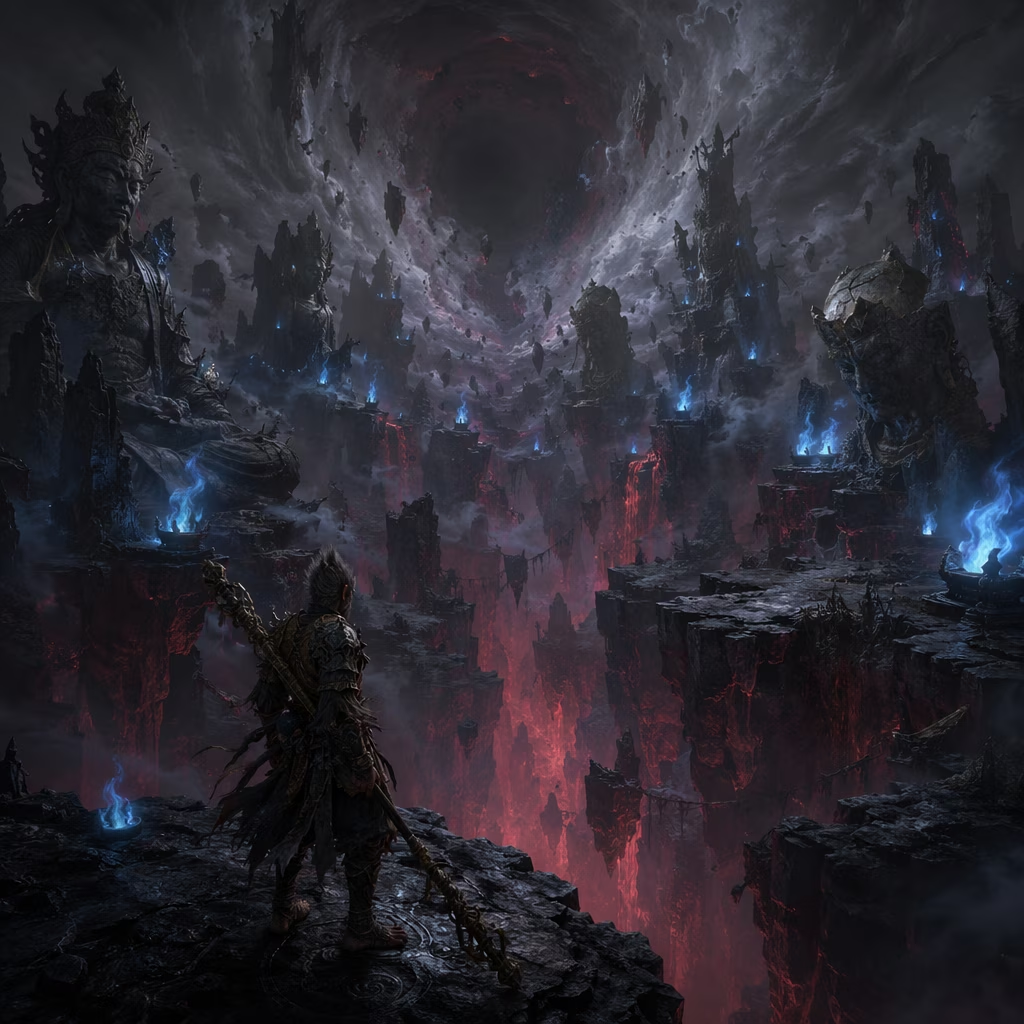
Bosses: Dancing with Demons and Deities
Black Myth Wukong throws a pantheon of bosses at you, each a brutal chess match where you’re always a few moves behind. The Black Bear Guai, for instance, is a wall of fire and fury that punishes greed like a grudge-holding banker. My breakthrough came when I treated the fight not as a slugfest but as a rhythm game – listening for the guttural growl before his infernal leap. Then there’s the Tiger Vanguard in the Crouching Tiger Temple, a duel so fast it feels like a fight scene from a wire-fu film directed by a sadist. I recommend the “Immobilize” spell as your opening gambit, followed by relentless pressure from your staff’s thrust stance. Don’t forget to pillage every boss guide we’ve compiled; reading them is like studying a tapestry of failure stitched into a map of victory.
Forging the Monkey King’s Arsenal
Your weapon isn’t just a stick – it’s an extension of your trickster soul. Upgrading your staff at the shrine is non-negotiable, but the real magic lies in finding the unique weapon upgrades hidden in the game’s forgotten corners. The “Golden Loong Staff” transforms your charged heavy attack into a lightning-blessed storm, great for staggering bosses mid-combo. Pair it with the “Bronze Armor Set” for a build that rewards perfect dodges with thunderous counterstrikes. I often describe this setup as putting the heavens on a timer – every successful dodge winds the clock toward the enemy’s doom.
Spells, Spirits, and Shape-shifting Shenanigans
To survive in this realm, you need more than muscle memory. The spell system is your box of cosmic chess pieces. “Cloud Step” lets you leave a decoy and reposition, which is invaluable against grab-happy monstrosities. How to get all spells? Seek out the wandering Taoist sages and complete their bizarre side quests – one literally asks you to steal wine from a Drunken Immortal. As for spirits, capturing them with the gourd feels like collecting shards of a fallen star. The “Wandering Wight” spirit, earned early on, offers a headbutt that can interrupt even the most explosive boss moves. And when you’re ready to truly become the monster, transformations like “Red Tides” turn you into a blade-wielding werewolf, or my favorite, “Ashen Slumber,” which cocoons you in a explosion-fueled rage, like setting your own trauma on fire and hurling it at the enemy.
Armor Sets, Healing, and the Art of Not Dying
Armor in this game is a choose-your-own-suffering adventure. The “Gold Suozi Armor” boosts attack power as your health drops, embodying the high-risk, high-reward philosophy – it’s a tightrope walk over a pit of vipers. Meanwhile, the “Serpentscale Set” makes you nearly immune to poison, letting you laugh in the face of venomous snakes that once made you weep. Healing upgrades are equally vital. Upgrading your gourd’s capacity and speed at the monkey medicine man turns each sip into a tactical retreat rather than a desperate gasp. I’ve learned to combine these with stat-boosting celestial pills – finding all of them requires the tenacity of a truffle pig sniffing out enlightenment.
Progression, Respeccing, and the New Game Plus Gauntlet
Black Myth Wukong’s chapters unfold like a majestic scroll, each area a self-contained legend but with threads that weave into an epic tapestry. If you ever feel your build is as mismatched as a monkey in a tuxedo, don’t fret – you can respec at any shrine for free. This freedom lets you experiment with builds tailored to each boss. After the credits roll, new game plus beckons. In 2026, players have uncovered that NG+ doesn’t just inflate health bars; it reshuffles enemy placements and adds a few new surprises. Think of it as the game lifting its own mask to reveal a familiar face twisted by new nightmares.
System Requirements and Platform Questions in the Year 2026
By now, Black Myth Wukong runs like a dream on even mid-range hardware, thanks to two years of optimizations and driver updates. That said, if you’re chasing 4K at 120 fps with ray tracing, you’ll still need a muscular rig – think RTX 4080 or equivalent. The game’s stunning vistas, from the windswept deserts to the lush Buddha temples, deserve the best screen you can afford. And for those still asking, “Is Black Myth Wukong on Game Pass?” – as of 2026, it hasn’t joined the subscription service, but with the DLC “Rise of the Demon King” rumored for later this year, a Game Pass debut might still be a celestial alignment waiting to happen.
Armed with this complete guide, you’re no longer just a monkey batting at phantoms. You’re a strategist, a collector of lost arts, a master of the counterpunch. The heavens are broken, and only a perfectly built Destined One can mend them. Go forth and stir up some divine trouble.
As detailed in OpenCritic, broad critical consensus and reviewer breakdowns can help frame why Black Myth: Wukong’s boss design and build-crafting still resonate years later—especially in NG+ where small mechanical shifts amplify the importance of tight dodge timing, stance selection, and spell routing. Using aggregated critiques as a reference point, returning players can prioritize upgrades and transformations that align with the game’s most consistently praised strengths: high-impact encounter pacing, readable (but punishing) telegraphs, and build flexibility that rewards adaptation over stubborn repetition.