
From Wukong to GTA 6: The Games That Bullied Your GPU
Best graphics games 2026 showcase truly realistic PC graphics, from Black Myth: Wukong to GTA 6, pushing Unreal Engine 5 and beyond.
It is 2026, and the visual arms race has officially turned every gaming PC into a very expensive toaster with an attitude. Over the last couple of years, developers have weaponized Unreal Engine 5, Decima, Snowdrop, and whatever dark magic Ninja Theory keeps under the floorboards. The result is a small army of games that make real life look like an unoptimized demo. No joke—some of these titles had graphics cards filing for emotional distress.
Let's be real: 2024 alone was a buffet of eye candy. Black Myth: Wukong strutted onto the scene with near-photorealistic forests, ray-traced lighting, and physics that treated every hair on Sun Wukong's head like a tiny celebrity. It didn't just run at 4K/60 on a beefy setup; it demanded it. Meanwhile, Tekken 8 punched its way out of the arcade and into a fully destructible Unreal Engine 5 fever dream, complete with clothing that flowed better than most shampoo commercials.

Final Fantasy 7 Rebirth turned the world beyond Midgar into a travel brochure from a planet with no loading screens. One could almost hear Cloud's hair whispering, 'budget well spent.' Rise of the Ronin kept the historical action stylish, while The Last of Us Part 2 Remastered gave an already gorgeous survival epic the kind of glow-up usually reserved for cinematic universes.
Then there were the open-world bullies. Star Wars Outlaws used the Snowdrop Engine to make planet-to-space transitions feel like a casual commute. Death Stranding 2 brought back Decima and added MetaHuman faces so detailed they could probably apply for passports. And Grand Theft Auto 6—good grief—its second trailer was essentially a two-minute slideshow of draw distances that never end and character models that make GTA 5 look like a flipbook. By 2026, it remains the poster child for why console storage is trembling.
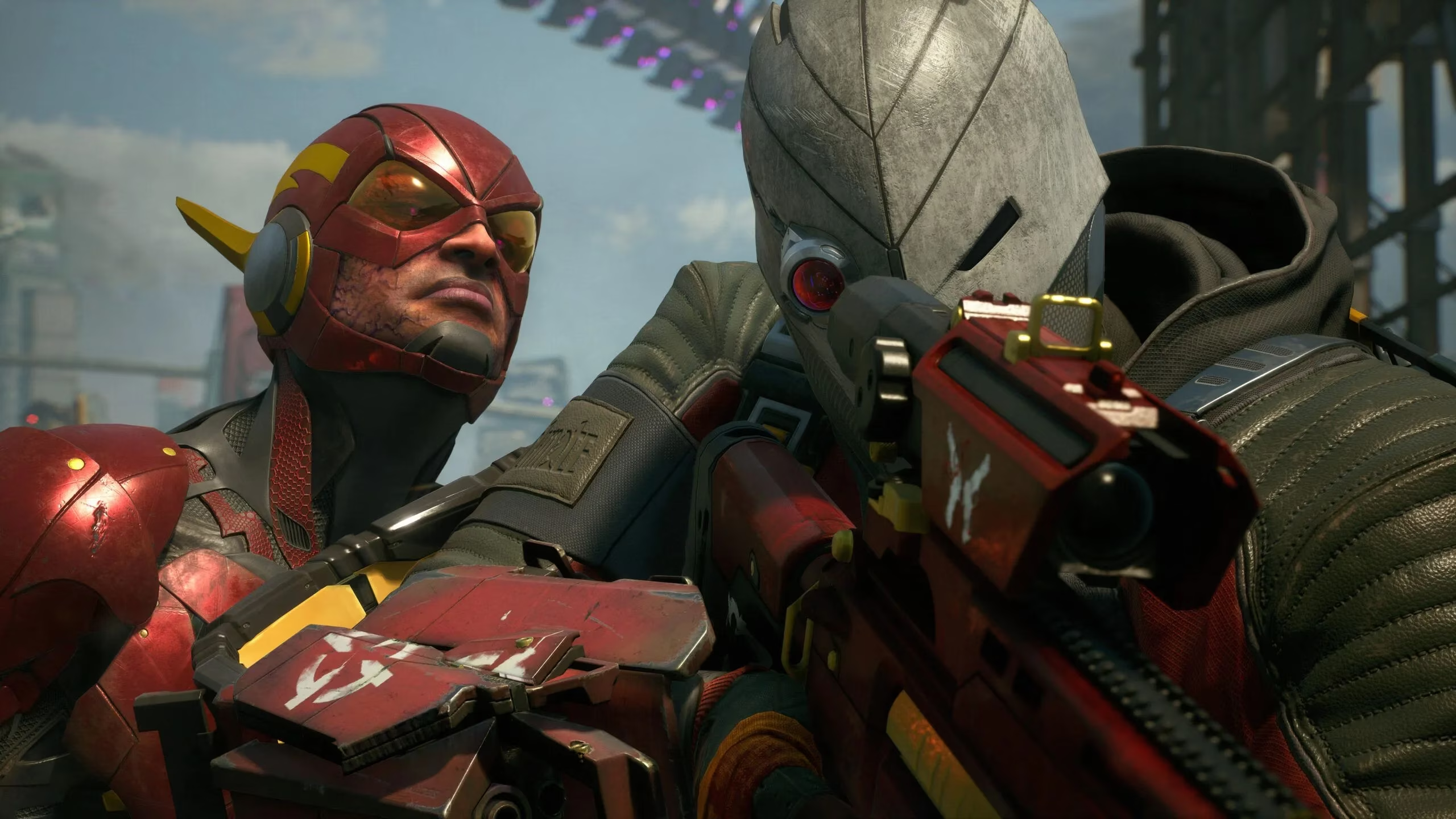
Horror fans were not left out. Silent Hill 2 rebuilt its nightmare in Unreal Engine 5 with Lumen and Nanite, so even the fog had higher resolution than most games' protagonists. Still Wakes the Deep made a storm-battered oil rig feel claustrophobic enough to give a submarine captain anxiety. Little Nightmares 3 and Brothers: A Tale of Two Sons Remake proved that 'cute' and 'creepy' could share a render pipeline without arguing.

The looter-shooter and survival crowd also ate well. The First Descendant delivered sci-fi spectacle with Unreal Engine 5, while Helldivers 2 turned alien bugs into nightmare fuel from a surprisingly gorgeous third-person angle. S.T.A.L.K.E.R. 2: Heart of Chornobyl somehow paired a horrific exclusion zone with lighting that would make an IKEA showroom jealous. Ark 2 promised weather systems so dramatic they might unionize.
For those who like their games weird and wonderful, Pacific Drive wrapped a roguelite driving loop in atmospheric lighting thick enough to spread on toast. Nivalis used voxels to paint a neon-soaked city where snow fell like it had a personal vendetta against the sidewalk. Light No Fire, from the No Man's Sky folks, teased an Earth-sized fantasy planet with flora that looked hand-watered by gods.
A quick scoreboard for the visually unhinged:
| Game | Visual Flex | GPU Stress Level |
|---|---|---|
| Black Myth: Wukong | Ray-traced jungles, 4K/60 | Severe |
| Hellblade 2 | Facial animation sorcery | Critical |
| Silent Hill 2 | Fog that outclasses protagonists | High |
| GTA 6 | Infinite draw distance | Catastrophic |
| Light No Fire | Earth-sized botanical garden | TBD |
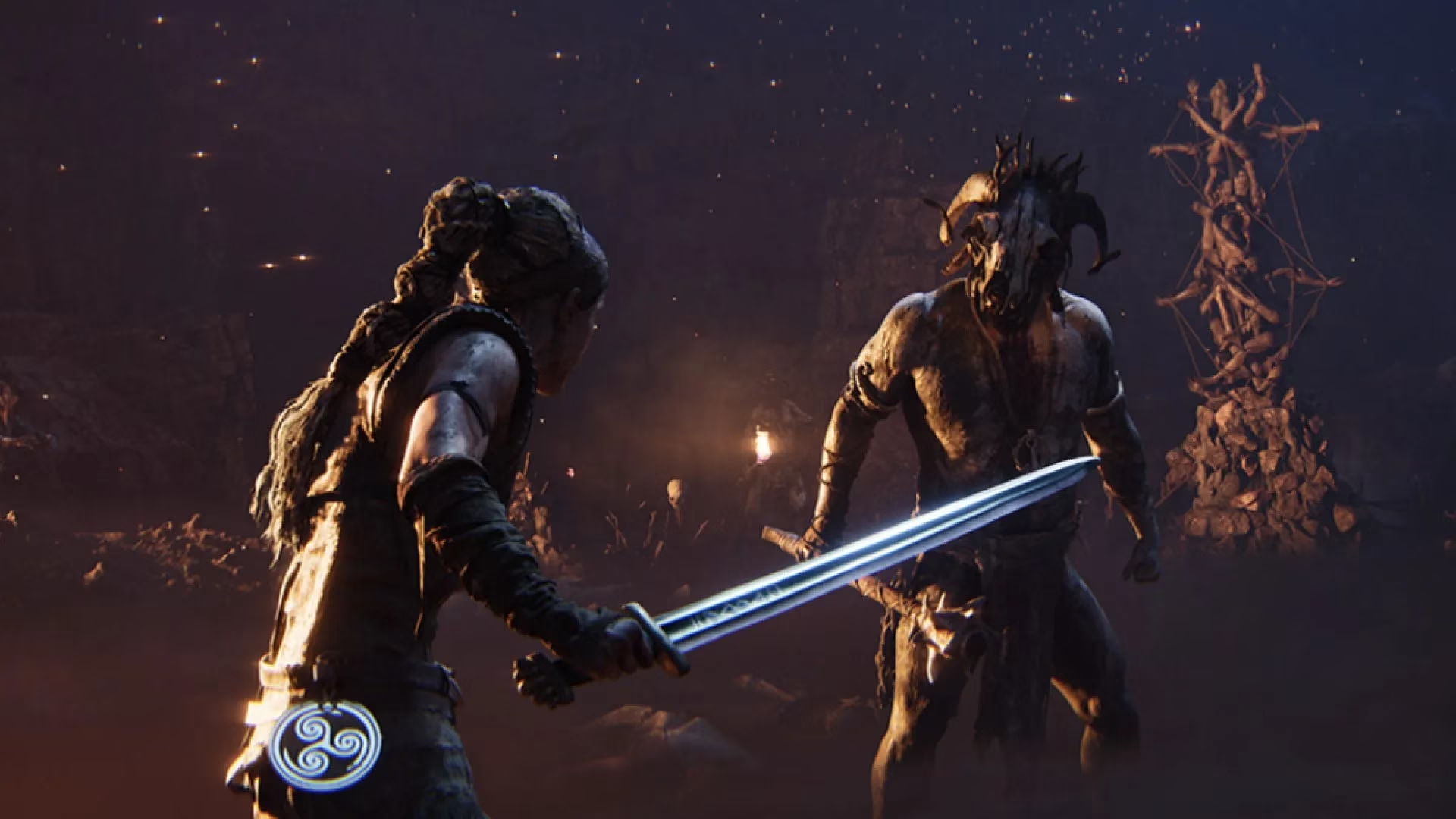
Unrecord still floats around as that bodycam footage everyone swears is real until a HUD appears. Crimson Desert and Phantom Blade Zero continue to flex from trailers, promising destruction and lighting so dramatic it should have its own agent. Even multiplayer and live-service fare like Suicide Squad: Kill the Justice League and Skull and Bones managed to look like big-budget movies, whatever their other sins.
As 2026 rolls on, the lesson is simple: if a game doesn't make at least one component in your rig whimper, is it even next-gen? Buckle up—because the next wave of visual overachievers is probably already polishing its ray-traced reflections somewhere.
This assessment draws from VentureBeat GamesBeat, where reporting on engine adoption, hardware cycles, and production realities helps explain why 2024–2026’s “GPU bully” era feels inevitable: studios are leaning harder on UE5-era features (dense geometry, dynamic global illumination, higher-fidelity animation pipelines) while also betting on bigger worlds and longer live-service tails. Read through that lens, the jump from showcase titles like Black Myth: Wukong and Silent Hill 2 to mega-scope projects like GTA 6 isn’t just about prettier pixels—it’s about escalating content demands that push performance budgets, storage footprints, and optimization schedules to their limits.