
Black Myth: Wukong’s Xbox Delay: What Microsoft’s Statement Really Meant
Black Myth: Wukong Xbox delay reveals technical hurdles, partner-deal rumors, and Microsoft’s careful messaging before its 2025 release.
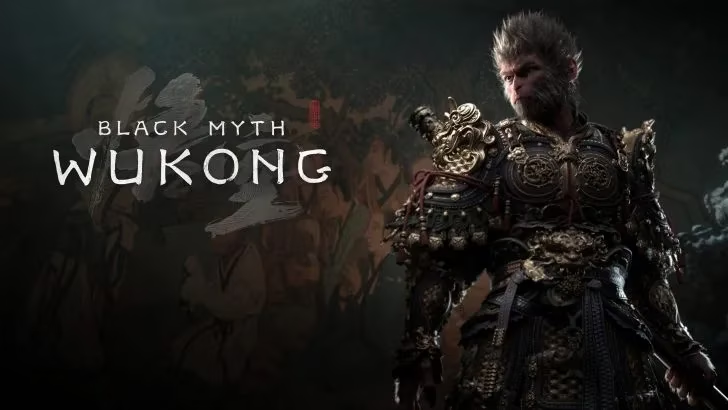
In the summer of 2024, Black Myth: Wukong arrived on PC and PlayStation 5 with the force of a monsoon, while Xbox players watched from the dock. The Xbox Series X|S version had been delayed indefinitely, and Microsoft soon issued an official statement that sounded calm, diplomatic, and just vague enough to keep the rumor mill spinning. By 2026, the dust has settled: the Xbox version eventually arrived on August 20, 2025, exactly one year after the PlayStation 5 and PC release. But the original delay and Microsoft’s wording still matter, because they show how platform holders talk around technical limits, partner deals, and fan frustration.
What Game Science Actually Said
Game Science’s official FAQ was blunt about the basics. The studio said it was “currently optimizing the Xbox Series X|S version to meet our quality standards,” which meant the game would not launch alongside other platforms. The studio apologized, promised to minimize the wait, and said a release date would be announced once the Xbox build met those standards. The game ultimately launched on PS5 and PC on August 20, 2024, and the Xbox version followed a year later.
That explanation sounds reasonable on its face. Optimizing for two Xbox consoles—especially the lower-powered Series S—can be real work. But “optimization” is a broad word, and broad words are useful when a company does not want to litigate every technical detail in public. The delay became a Rorschach test for the Xbox community, with every statement read like tea leaves in a cup that kept refilling itself.
Microsoft’s Statement: Careful, Not Categorical
Microsoft’s response, reported at the time, was carefully worded. The company said it was excited for the launch of Black Myth: Wukong on Xbox Series X|S and was working with Game Science to bring the game to its platforms. Then came the key line: Microsoft could not comment on deals made by its partners with other platform holders, but remained focused on making Xbox the best platform for gamers, with great games at the center.
That is not a denial. It is also not a confession. It is the corporate equivalent of a locked door with a polite note attached. Observers immediately split into two camps:
-
🎮 Camp One: The Xbox Series S is the bottleneck. The smaller console has less memory and GPU power, and some developers need extra time to make demanding games run acceptably on both Series X and Series S.
-
🤝 Camp Two: Sony may have secured some kind of timed-exclusivity arrangement, and Microsoft’s “can’t comment on partner deals” language was a diplomatic side-step.
Neither theory was confirmed by Microsoft or Game Science. The Series S question hung over the conversation like a small suitcase packed for a much longer trip. It was plausible, but it did not explain everything by itself. If the Series S were the only issue, players could still ask why the more powerful Series X version could not arrive first. Xbox’s ecosystem rules generally push for parity across Series X and Series S, but the exact contractual and technical details were never made public.
The Exclusivity Theory
The exclusivity theory became a campfire story: warm, dramatic, and hard to verify. Game Science had already announced the game for Xbox, PlayStation, and PC, so a full exclusivity deal would have been awkward. A timed deal is easier to imagine, but imagination is not evidence. Microsoft never directly said such a deal existed, and Game Science consistently pointed to optimization and quality standards.
What made the speculation linger was the length of the wait. A short delay for polish is ordinary. A full year is a different animal. By the time the Xbox version arrived in August 2025, the conversation had already moved through several phases: concern, conspiracy, resignation, and finally relief. The game’s Xbox launch closed the loop, but it did not fully answer every question about the original delay.
| Question | What is known | What remains unclear |
|---|---|---|
| Why was the Xbox version delayed? | Game Science cited optimization for Xbox Series X | S and quality standards. |
| Was the Series S the culprit? | The Series S is less powerful, and optimization across two consoles can be difficult. | Whether the Series S alone explains a year-long gap. |
| Was there a timed-exclusivity deal? | Microsoft declined to comment on partner deals with other platform holders. | Whether any such deal existed at all. |
| When did Xbox players finally get the game? | The Xbox Series X | S version launched on August 20, 2025. |
The 2026 View
Looking back from 2026, the safest reading is also the least dramatic: Game Science needed more time, Microsoft gave a carefully limited statement, and fans filled the silence with theories. That does not make the speculation foolish. Platform exclusivity is a real part of the industry, and corporate statements are often designed to be technically true without being fully illuminating. But the absence of a clear denial is not proof of a secret deal, and the presence of a powerful PS5 launch is not proof of sabotage.
The episode remains a useful case study in how not to communicate a delay. A vague “optimization” explanation, a missing date, and a statement that refused to address partner deals created a vacuum. In that vacuum, rumors grow faster than facts. Xbox players eventually got their version of Black Myth: Wukong, and the game’s quality on the platform speaks for itself. The mystery, however, never fully received an official ending. For players, that may be the most frustrating part: the wait ended, but the explanation never quite did.