
Black Myth: Wukong's Steam Record and the Stories Behind the Myth
Black Myth: Wukong shatters Steam records, captivating action-RPG fans and celebrating Chinese mythology in a historic gaming launch.
When Marcus sat down at his battlestation in the late summer of 2024, he had no intention of becoming part of gaming history. He was just an ordinary player, a bit of an action-RPG fan with a soft spot for challenging boss fights. But the chatter on his Steam friends list was impossible to ignore. Black Myth: Wukong had launched, and from the moment the servers started humming, the numbers were absolutely bonkers. By the time he grabbed his controller, the game was well on its way to smashing records like a Monkey King swinging a giant staff.
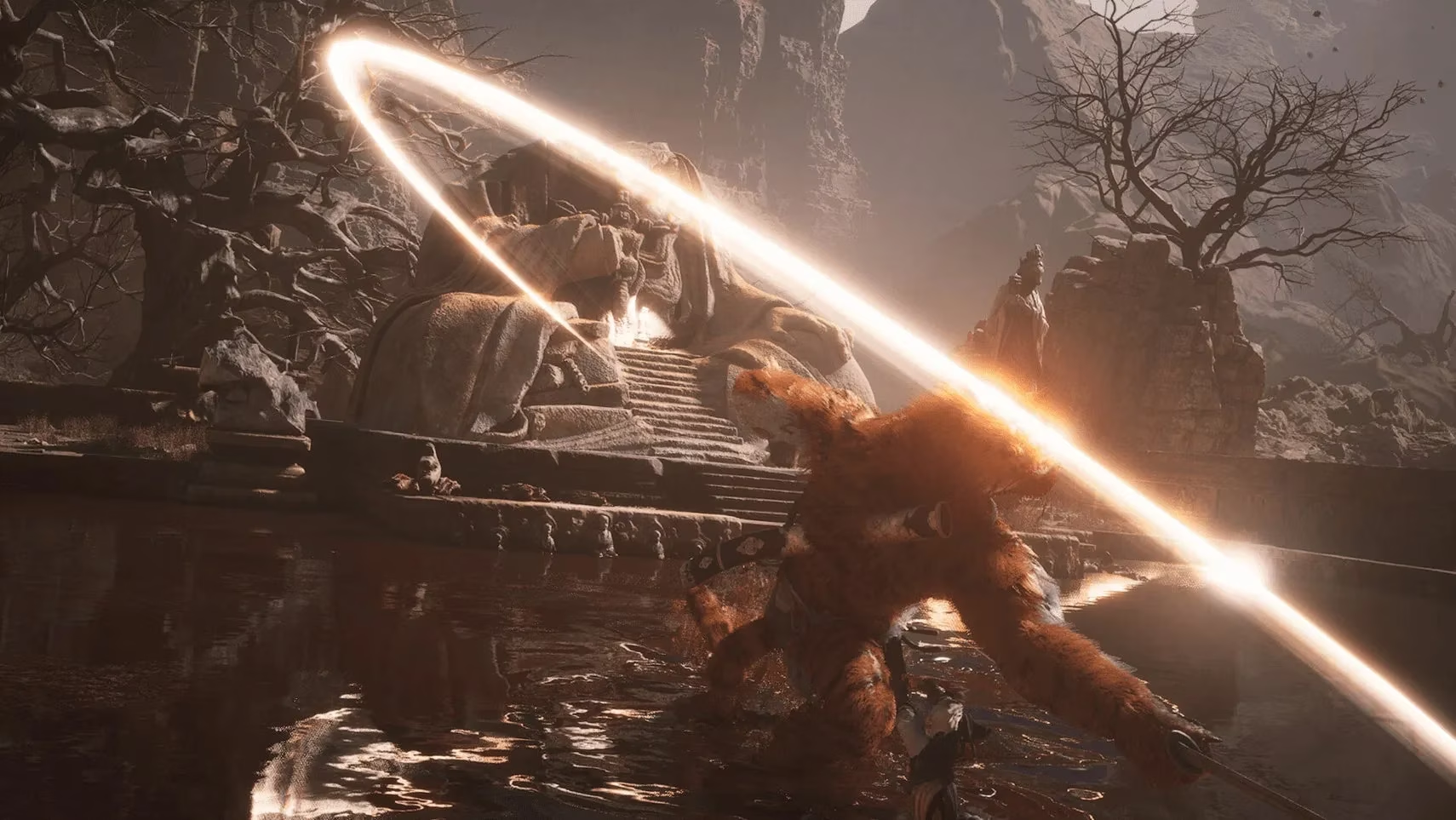
Within a few short hours, Black Myth: Wukong had already become the most played single-player title of all time on Steam. That was no small feat. Early reports put its concurrent player peak at 1,443,570, which was enough to bop Cyberpunk 2077’s all-time peak of 1,054,388 and Elden Ring’s 953,426 straight out of the way. It had also outrun the launch-day hype of Hogwarts Legacy and Dota 2. For a new IP from Game Science, rooted in Chinese mythology, it was the kind of debut most studios only ever dream about.
Then the plot thickened. By 2pm UK time, the player count had climbed even higher. The new concurrent peak stood at a jaw-dropping 2,125,077. That meant Black Myth: Wukong had leapfrogged both Counter-Strike 2 and Palworld to become the second most played game of all time on Steam, trailing only PUBG: Battlegrounds. For Marcus, watching the SteamDB graphs climb in real time felt like watching a launch day miracle unfold.
 .png?width=2048&height=2048&fit=bounds&quality=85&format=jpg&auto=webp)
The numbers were not just impressive; they were a genuine cultural moment. GameDiscoverCo founder Simon Carless estimated that a whopping 88.1 percent of the game’s Steam players were from China. The United States made up about 3 percent, Hong Kong 1.6 percent, and Japan around 1 percent. That kind of regional concentration was rare for a global release, and it told a clear story: Black Myth: Wukong was not merely a game. It was a love letter to Chinese mythology, and local players had turned up in droves to support it.
For an ordinary player like Marcus, the appeal was simple. The game looked spectacular, the combat felt weighty, and the mythological setting provided a fresh backdrop compared to the usual fantasy fare. But not everything about the launch was sunshine and rainbows. The game had plenty of baggage trailing behind its golden staff.
Reports before the release had already raised eyebrows. Game Science CEO Féng Jì had been linked to old posts containing sexualised and misogynistic language. IGN later reported on the studio's history with sexism. Then, days before launch, a leaked document sent to influencers surfaced online. It reportedly asked them to avoid mentioning “politics,” “feminist propaganda,” or Covid-19 in their coverage. For many players, that was a bitter pill to swallow. It meant the hype train came with some pretty serious caution signs.
Eurogamer’s review reflected that complexity. The game received three out of five stars. The review called Black Myth: Wukong’s boss fights “dramatic and spectacular,” but also described the game behind the glitz as “a frustratingly hollow and rudderless action game.” That phrase stuck with Marcus. He had felt the highs—the razor-sharp duels, the gorgeous environments, the cinematic sweep of it all—but he also sensed the hollowness in some of its world-building. It was a classic case of a game that could knock your socks off in one moment and leave you scratching your head in the next.
.png?width=2048&height=2048&fit=bounds&quality=85&format=jpg&auto=webp)
Here is a quick look at the launch-day pecking order Marcus saw on SteamDB:
| Rank | Game | Peak Concurrent Players |
|---|---|---|
| 1 | PUBG: Battlegrounds | Higher |
| 2 | Black Myth: Wukong | 2,125,077 |
| 3 | Counter-Strike 2 | Pushed down |
| 4 | Palworld | Pushed down |
By 2026, the dust had long settled. Black Myth: Wukong had cemented its place in Steam history, but the conversation around it remained layered. It was a record-breaking phenomenon, a source of national pride for many Chinese players, and a lightning rod for criticism all at once. That mix of triumph and controversy was, in many ways, the real story. For Marcus, it was a reminder that games can be cultural events and messy, human creations at the same time.