
Black Myth: Wukong in 2026: Never Just Another Soulslike
Black Myth: Wukong defies Soulslike labels as an action RPG, blending staff combat, magic, and Unreal Engine 5 spectacle into a mythic adventure.
By 2026, Black Myth: Wukong has had time to cement its reputation, and the early chatter that it was just another Soulslike now feels like a half-remembered misunderstanding. When Game Science first revealed the game, many observers were quick to group it with FromSoftware's catalogue, noting swift surgical combat, deep exploration, dense lore, mysterious NPCs, and phantasmagorical boss battles. However, Game Science co-creator Feng Ji never signed off on that label. In interviews before launch, he called Black Myth: Wukong an action RPG 'plain and simple' and explained the studio wasn't trying to replicate any particular game or style.
That didn't mean the team was ignoring FromSoftware entirely. Feng Ji argued that replicating a specific style involves different focuses: an action title should lean into performance and execution, while learning from Monster Hunter means prioritising the animation of massive enemies. His more provocative comment was that matching a specific product naturally leads to making a B game—something inferior and unoriginal. At the time, that raised eyebrows because Lies of P and Stellar Blade were proving that games could wear the Soulslike label proudly and still be excellent. But from a 2026 vantage point, Feng Ji's point about his own game holds up. Black Myth: Wukong needed to be its own thing.
So what does 'its own thing' actually look like? For starters, the combat is built around a single staff, yet the game manages to keep that weapon interesting across a 30–40 hour campaign. Light attacks are quick and encourage combos, while heavy attacks come with a warmup animation—a risk-versus-reward choice that rewards timing rather than aggression. Dodging is the main defensive tool, because parrying isn't available at first, but there's a perfect dodge that can grant focus points for powerful special moves. If a player leans on dodge too heavily, the cooldown meter will bite back. Stamina also governs attacks and dodges, so button mashing won't get anyone very far. To be honest, that's a welcome layer of tension that makes each encounter feel deliberate.
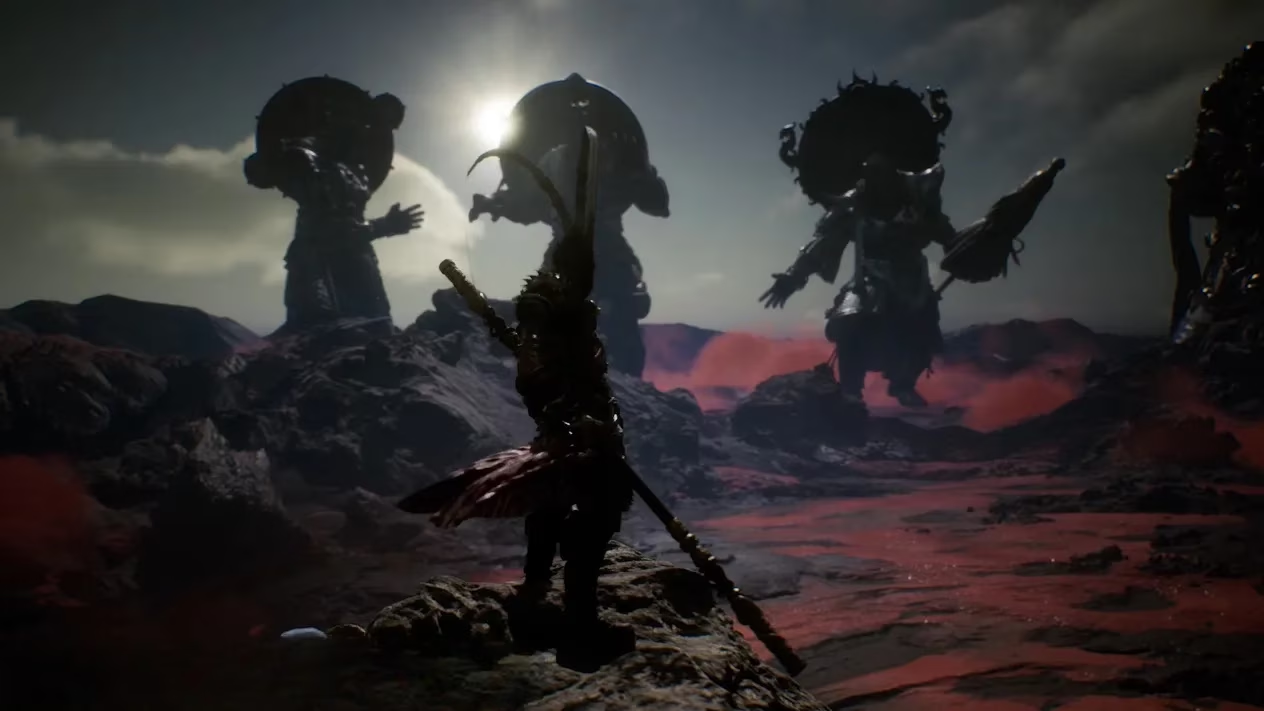
Magic and transformation add another layer. Because the source material is Chinese mythology, spells operate on cooldown meters, and shapeshifting is part of the Destined One's toolkit. The most memorable addition may be the pillar stance, where Wukong mounts the staff like a giant pogo stick, avoiding ground attacks at the cost of stamina while charging a devastating slam. It's a fantastic image and a neat example of the game's willingness to blend spectacle with strategy.
Visually, the game was always a showcase. Crafted in Unreal Engine 5, the mythical environments are impressively detailed, and during a pre-release demo in Los Angeles, players on PC reported no frame rate drops or texture pop-in. Let's be honest: Black Myth: Wukong looks jaw-dropping, and the fact that such visual ambition translated into a stable full release is no small achievement. The game walks a line between tech-demo polish and actual playability, and it manages to stay on the right side.
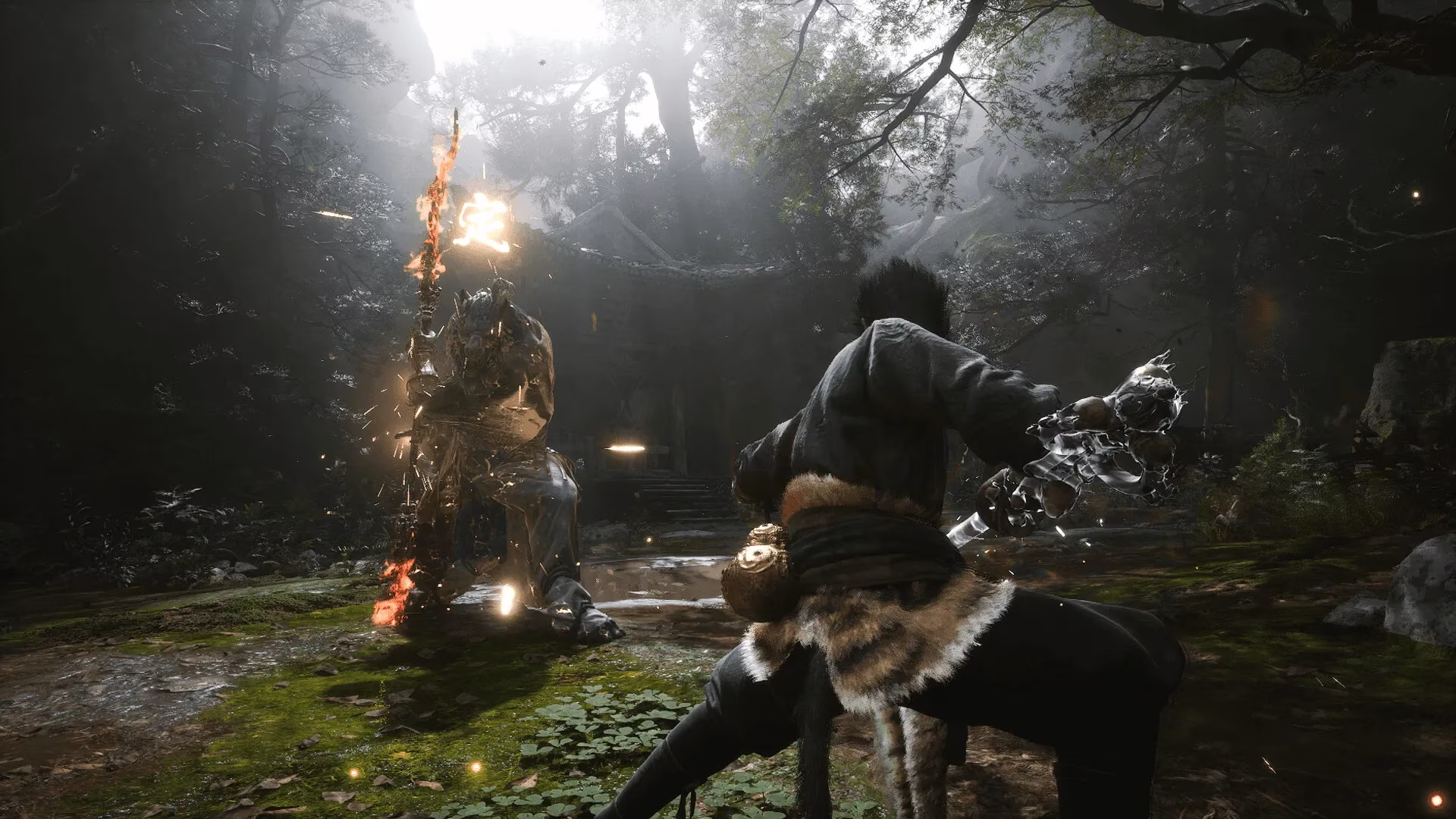
One lingering concern before launch was that the game's linear structure might turn it into a boss rush. Demo impressions suggested curated environments with secrets to discover rather than an open world, and Game Science did not back away from that approach. In hindsight, the focused design likely helped the story of the Destined One—a character loosely based on Sun Wukong from Journey to the West—land with more clarity. It also allowed the developers to tune encounters tightly without the sprawl of an open-world checklist.
None of this means Black Myth: Wukong rejects every comparison. The echoes of Sekiro are still there in its perfect dodge tension, and Monster Hunter's influence shows in the massive enemies and their animation. But the finished game, viewed from 2026, proves the larger point. It isn't a B game chasing a template. It's a composite of subgenres whisked into something fresh by its mythological setting. Whether Game Science has created a new genre is still up for debate, but they've absolutely created a game that stands apart from the crowd.